๐“๐ก๐ž ๐‡๐ข๐ ๐ก-๐‹๐ž๐ฏ๐ž๐ฅ ๐Ž๐ฏ๐ž๐ซ๐ฏ๐ข๐ž๐ฐ: ๐–๐ก๐š๐ญ ๐š๐ซ๐ž ๐† ๐๐ซ๐จ๐ญ๐ž๐ข๐ง๐ฌ?

ย Let’s break down the definitions ofย G proteinsย in general, and then the specificย Gi/o proteinย family.

1. The High-Level Overview: What are G Proteins?

G proteins, orย guanine nucleotide-binding proteins, are a family of molecular switches that transmit signals from the outside of a cell to its interior. They are crucial components of a major signaling pathway used by cells to respond to their environment.

Think of them as a relay team inside your cells:

  1. Signal:ย A hormone (like adrenaline) or a neurotransmitter (like serotonin) arrives at the cell surface and binds to a receptor.

  2. Receptor Activation:ย This receptor is aย G Protein-Coupled Receptor (GPCR). When the signal molecule binds, the receptor changes shape.

  3. G Protein Activation:ย This shape change activates the G protein attached to the inside of the receptor. The G protein “turns on” by swapping its boundย GDP (guanosine diphosphate)ย for aย GTP (guanosine triphosphate).

  4. Effector Action:ย The “on” G protein (now with GTP) splits into two parts (ฮฑ and ฮฒฮณ subunits), which then travel along the cell membrane to interact with and activate or inhibitย effector proteins.

  5. Cellular Response:ย These effector proteins (like enzymes or ion channels) then create a change inside the cell, such as producing a second messenger (like cAMP) or altering the cell’s electrical activity.

  6. Shut Off:ย The G protein’s ฮฑ subunit has an internal timer. It hydrolyzes GTP back to GDP, turning itself “off.” The subunits then reassemble, ready for the next cycle.


2. The Specifics: Gi/o Proteins

Gi/o proteinsย are a specific subfamily of G proteins. The name “Gi/o” comes from their two primary functions:

  • Gi:ย Gย proteinย inhibitory

  • Go:ย Gย proteinย other (primarily found in the brain)

The most well-characterized member isย Giย (G inhibitory).

Key Characteristics of Gi/o Proteins:

1. Primary Function:
Their main role is toย inhibitย the enzymeย adenylyl cyclaseย (also called adenylate cyclase).

  • What is Adenylyl Cyclase?ย This is an effector enzyme that converts ATP intoย cyclic AMP (cAMP), a vital “second messenger” inside the cell.

  • The Gi/o Effect:ย When a Gi/o protein is activated, itย decreasesย the production of cAMP.

  • The Balance:ย This is the opposite of another G protein family,ย Gsย (G stimulatory), whichย increasesย cAMP production. The level of cAMP in a cell is often a balance between the signals coming through Gs and Gi/o receptors.

2. Additional Actions:
The Gi/o family doesn’t just inhibit adenylyl cyclase. When activated, its subunits can also:

  • ฮฒฮณ Subunits:ย Directly activate certain types ofย potassium channels (Kโบ channels). This hyperpolarizes the cell (makes it more negative), making it less excitable. This is a very important mechanism in the heart and nervous system.

  • ฮฒฮณ Subunits:ย Inhibit certain types ofย voltage-gated calcium channels, preventing calcium from entering the cell.

  • ฮฑ Subunit (Gฮฑo):ย Can interact with other signaling pathways in complex ways, particularly in the brain.

3. Sensitive to Pertussis Toxin:
A key identifying feature of the Gi/o family is its sensitivity toย Pertussis Toxinย (from the bacterium that causes whooping cough). This toxin chemically modifies the Gi/o protein, “locking” it in its inactive (GDP-bound) state and preventing it from interacting with the receptor. This is a classic tool scientists use to determine if a cellular process involves a Gi/o protein.

Examples of Gi/o-Coupled Receptors and Their Effects:

  • ฮฑโ‚‚-Adrenergic Receptors:ย Bind neurotransmitters like norepinephrine. Their activation via Gi/o leads to a decrease in cAMP, resulting in effects like reduced sympathetic (fight-or-flight) outflow in the brain.

  • Mโ‚‚ Muscarinic Acetylcholine Receptors:ย In the heart, activation of these receptors by acetylcholine activates Gi/o, which opens Kโบ channels and slows the heart rate.

  • Dโ‚‚ Dopamine Receptors:ย In the brain, these receptors are involved in mood, reward, and movement. Their activation inhibits cAMP production.

  • Opioid Receptors (ฮผ, ฮด, ฮบ):ย Activation of these receptors by endorphins or opioid drugs (like morphine) uses Gi/o proteins to produce pain relief (analgesia), sedation, and euphoria. A major mechanism is the inhibition of adenylyl cyclase and the opening of Kโบ channels.


Summary Table: Gi/o Proteins at a Glance

Feature Description
Full Name Guanine nucleotide-binding proteins, Inhibitory/Other class
Main Function Inhibitย the enzymeย adenylyl cyclase, reducing cellularย cAMPย levels.
Key Subunits ฮฑi/o subunit: Binds GTP/GDP and inhibits adenylyl cyclase.
ฮฒฮณ subunits: Can directly activate Kโบ channels and inhibit Caยฒโบ channels.
Defining Toxin Pertussis Toxinย inactivates Gi/o proteins.
Opposing G Protein Gsย (G stimulatory), which activates adenylyl cyclase and increases cAMP.
Example Receptors ฮฑโ‚‚-Adrenergic, Mโ‚‚ Muscarinic, Dโ‚‚ Dopamine, Opioid (ฮผ, ฮด, ฮบ) receptors.
Physiological Roles Slowing heart rate, pain relief, neurotransmitter inhibition, regulating mood and reward.

In essence,ย Gi/o proteins are the “brakes” in many cellular signaling pathways, counteracting the “accelerator” signals from other proteins like Gs to fine-tune the cell’s response.

๐Œ๐จ๐ซ๐ž ๐จ๐ง ๐ง๐ž๐ฎ๐ซ๐จ-๐ž๐ฅ๐ž๐œ๐ญ๐ซ๐ข๐œ ๐ฆ๐ฎ๐ฌ๐œ๐ฎ๐ฅ๐š๐ญ๐ฎ๐ซ๐ž ๐๐ž๐ฏ๐ข๐œ๐ž๐ฌ

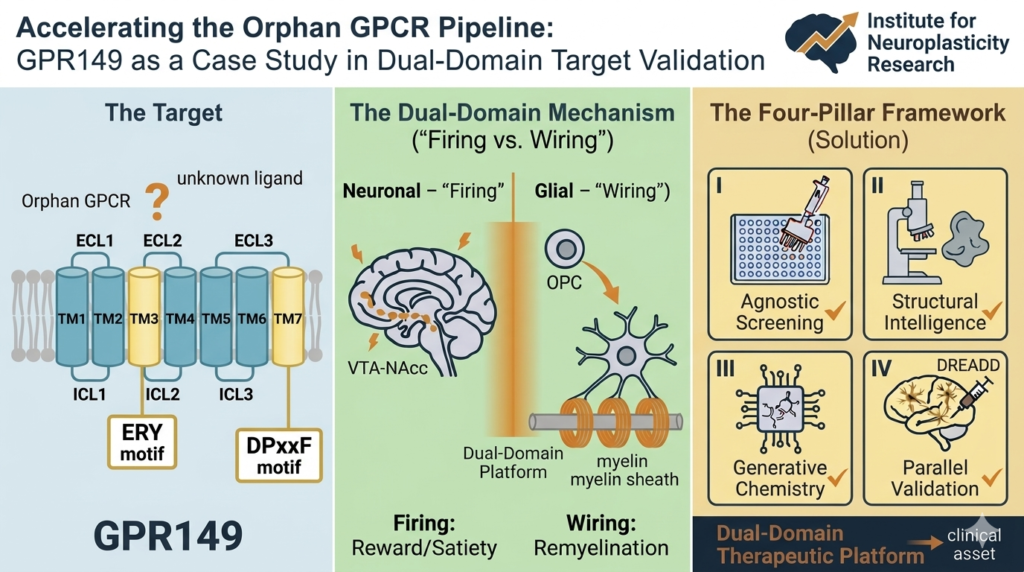
๐Œ๐จ๐ซ๐ž ๐จ๐ง ๐ง๐ž๐ฎ๐ซ๐จ-๐ž๐ฅ๐ž๐œ๐ญ๐ซ๐ข๐œ ๐ฆ๐ฎ๐ฌ๐œ๐ฎ๐ฅ๐š๐ญ๐ฎ๐ซ๐ž ๐๐ž๐ฏ๐ข๐œ๐ž๐ฌ Oligodendrocyte precursor cell (OPC) differentiation and remyelination are highly relevant to neuro-electric musculature devices because they are crucial for maintaining and repairing the neural pathways that these devices interact with. OPC differentiation creates new oligodendrocytes, which form myelin sheaths that insulate axons, allowing for faster and more efficient nerve signal transmission. Remyelination, a process where OPCs mature into oligodendrocytes and remyelinate damaged axons, helps restore normal function after injury, making it a key target for both natural repair and therapeutic intervention through devices that can stimulate or support this process.

Relevance to neuro-electric musculature devices

Improving signal transmission:ย Neuro-electric devices rely on the efficient transmission of electrical signals between neurons and muscles.

Myelination’s role:ย Oligodendrocytes create myelin sheaths that insulate axons, allowing nerve signals to jump from one gap to another (saltatory conduction), which significantly increases conduction speed and efficiency.

Device impact:ย Devices that stimulate neurons will be more effective if the neural pathways are well-myelinated.

Supporting neural repair and regeneration:ย In cases of neural damage or demyelination (where the myelin sheath is lost), OPCs are crucial for repairing the damage through the process of remyelination.

Device interaction:ย Devices that use electrical stimulation, such asย transcranial magnetic stimulation (TMS), can potentially promote OPC differentiation and remyelination in response to injury.

Therapeutic potential:ย This interaction is a key area of research for developing new therapies to help repair neural circuits damaged by injury or disease, which would in turn enhance the effectiveness of neuro-electric devices.

Understanding and controlling cell behavior:ย Advances in understanding OPC differentiation and remyelination are key to creating more effective neural interfaces.

Molecular targets:ย Research into the molecular signals that regulate OPC development can lead to new ways to influence them directly.

Targeted therapies:ย The goal is to design devices and therapies that can specifically target and enhance remyelination, making neural connections more robust and responsive.

How it works

Differentiation:ย OPCs are a type of neural progenitor cell that can differentiate into mature oligodendrocytes. This differentiation is a complex process involving specific transcription factors and molecular signals.

Remyelination:ย In response to injury, OPCs proliferate, migrate to the damaged area, and differentiate into new oligodendrocytes to rebuild the myelin sheaths on demyelinated axons.

Regulation:ย This process is tightly regulated by both intrinsic (e.g., gene expression) and extrinsic (e.g., external signals like those from electrical stimulation) factors.

Summary

In essence, the ability of OPCs to differentiate and remyelinate nerves is the foundation for effective neural communication. For neuro-electric devices, this means that by either stimulating or supporting the natural remyelination process, one can potentially enhance the device’s efficacy, improve outcomes after injury, and develop novel therapeutic strategies.

๐Œ๐จ๐ซ๐ž ๐จ๐ง ๐ง๐ž๐ฎ๐ซ๐จ-๐ž๐ฅ๐ž๐œ๐ญ๐ซ๐ข๐œ ๐ฆ๐ฎ๐ฌ๐œ๐ฎ๐ฅ๐š๐ญ๐ฎ๐ซ๐ž ๐๐ž๐ฏ๐ข๐œ๐ž๐ฌ

Oligodendrocyte precursor cell (OPC) differentiation and remyelination are highly relevant to neuro-electric musculature devices because they are crucial for maintaining and repairing the neural pathways that these devices interact with. OPC differentiation creates new oligodendrocytes, which form myelin sheaths that insulate axons, allowing for faster and more efficient nerve signal transmission. Remyelination, a process where OPCs mature into oligodendrocytes and remyelinate damaged axons, helps restore normal function after injury, making it a key target for both natural repair and therapeutic intervention through devices that can stimulate or support this process.ย 
Relevance to neuro-electric musculature devices
  • Improving signal transmission:ย Neuro-electric devices rely on the efficient transmission of electrical signals between neurons and muscles.
    • Myelination’s role:ย Oligodendrocytes create myelin sheaths that insulate axons, allowing nerve signals to jump from one gap to another (saltatory conduction), which significantly increases conduction speed and efficiency.
    • Device impact:ย Devices that stimulate neurons will be more effective if the neural pathways are well-myelinated.
  • Supporting neural repair and regeneration:ย In cases of neural damage or demyelination (where the myelin sheath is lost), OPCs are crucial for repairing the damage through the process of remyelination.
    • Device interaction:ย Devices that use electrical stimulation, such asย transcranial magnetic stimulation (TMS), can potentially promote OPC differentiation and remyelination in response to injury.
    • Therapeutic potential:ย This interaction is a key area of research for developing new therapies to help repair neural circuits damaged by injury or disease, which would in turn enhance the effectiveness of neuro-electric devices.
  • Understanding and controlling cell behavior:ย Advances in understanding OPC differentiation and remyelination are key to creating more effective neural interfaces.
    • Molecular targets:ย Research into the molecular signals that regulate OPC development can lead to new ways to influence them directly.
    • Targeted therapies:ย The goal is to design devices and therapies that can specifically target and enhance remyelination, making neural connections more robust and responsive.ย 
How it works
  • Differentiation:ย OPCs are a type of neural progenitor cell that can differentiate into mature oligodendrocytes. This differentiation is a complex process involving specific transcription factors and molecular signals.
  • Remyelination:ย In response to injury, OPCs proliferate, migrate to the damaged area, and differentiate into new oligodendrocytes to rebuild the myelin sheaths on demyelinated axons.
  • Regulation:ย This process is tightly regulated by both intrinsic (e.g., gene expression) and extrinsic (e.g., external signals like those from electrical stimulation) factors.ย 
Summary
In essence, the ability of OPCs to differentiate and remyelinate nerves is the foundation for effective neural communication. For neuro-electric devices, this means that by either stimulating or supporting the natural remyelination process, one can potentially enhance the device’s efficacy, improve outcomes after injury, and develop novel therapeutic strategies.ย 


๐‡๐จ๐ฐ ๐ข๐ฌ ๐จ๐ฅ๐ข๐ ๐จ๐๐ž๐ง๐๐ซ๐จ๐œ๐ฒ๐ญ๐ž ๐ฉ๐ซ๐ž๐œ๐ฎ๐ซ๐ฌ๐จ๐ซ ๐๐ข๐Ÿ๐Ÿ๐ž๐ซ๐ž๐ง๐ญ๐ข๐š๐ญ๐ข๐จ๐ง ๐š๐ง๐ ๐ซ๐ž๐ฆ๐ฒ๐ž๐ฅ๐ข๐ง๐š๐ญ๐ข๐จ๐ง ๐ซ๐ž๐ฅ๐ž๐ฏ๐š๐ง๐ญ๐ฌ ๐ญ๐จ ๐ง๐ž๐ฎ๐ซ๐จ-๐ž๐ฅ๐ž๐œ๐ญ๐ซ๐ข๐œ ๐ฆ๐ฎ๐ฌ๐œ๐ฎ๐ฅ๐š๐ญ๐ฎ๐ซ๐ž ๐๐ž๐ฏ๐ข๐œ๐ž๐ฌ?

Oligodendrocyte precursor differentiation and remyelination describes the biological process by which the central nervous system (CNS) repairs damage to the protectiveย myelin sheathย that surrounds nerve fibers (axons).ย 
This process is critical for restoring efficient nerve signal transmission and preventing permanent axonal degeneration in demyelinating conditions like multiple sclerosis (MS) and spinal cord injuries (SCI).ย 
The Process Explained
The entire process involves a series of coordinated steps:
  • Demyelination:ย In diseases or injuries, the existing myelin sheath is damaged and lost, impairing nerve function.
  • Recruitment and Proliferation:ย In response to injury, existing, non-myelinating cells in the adult CNS, called oligodendrocyte precursor cells (OPCs), are activated. They migrate to the site of damage and multiply to form a sufficient pool of potential myelin-producing cells.
  • Oligodendrocyte Precursor Differentiation:ย The multiplied OPCs then mature and differentiate into fully functional, mature oligodendrocytes. This maturation process is tightly controlled by various intrinsic and extrinsic molecular signals.
  • Remyelination:ย The newly formed, mature oligodendrocytes wrap new myelin sheaths around the demyelinated axons. This restores the insulation and metabolic support for the nerve fibers, allowing for the rapid and efficient conduction of electrical signals.ย 
Importance and Therapeutic Relevance
  • Restoration of Function:ย Successful remyelination is associated with reduced disability and improved functional recovery in patients with demyelinating diseases.
  • Axon Protection:ย Myelin not only ensures efficient signal transmission but also provides vital support to the axons themselves, preventing their permanent degeneration.
  • Therapeutic Target:ย Understanding the molecular control of OPC differentiation and the remyelination process is a major focus of research. Therapies that enhance this natural repair mechanism are a promising approach for treating conditions like MS. For example, the drug clemastine has shown promise in preclinical and clinical studies for promoting OPC differentiation and remyelination.ย 

The Regulatory Pathway for High-Risk Neuro-Electric Devices: From Preclinical to Post-Market

The Regulatory Pathway for High-Risk Neuro-Electric Devices: From Preclinical to Post-Market

The regulatory pathway for a Class III neuro-electric device, such as an implantable BCI, is a rigorous, evidence-driven process overseen by the U.S. Food and Drug Administration. The journey typically begins with extensive preclinical testing, which must establish a reasonable assurance of safety. This involves biocompatibility testing per ISO 10993 standards, which evaluates the potential for cytotoxicity, sensitization, and chronic inflammation, and accelerated aging studies to predict the device’s functional longevity in the human body.

For a device that constitutes a significant risk, an Investigational Device Exemption must be submitted to the FDA to gain approval for a clinical study. The IDE application is a comprehensive document that includes the complete preclinical test reports, the clinical investigation protocol, manufacturing information, and a thorough risk analysis performed in accordance with ISO 14971. The risk management file must identify all known and foreseeable hazards, from surgical risks to long-term cybersecurity vulnerabilities.

The choice of the pivotal regulatory pathwayโ€”Pre-Market Approval versus the De Novo classificationโ€”depends on the device’s predicate status. A BCI with novel technology and no valid predicate is automatically Class III and requires a PMA, the most stringent type of FDA submission. The PMA application demands valid scientific evidence from the clinical investigation to demonstrate the device’s safety and effectiveness for its intended use, often requiring a controlled trial with a primary effectiveness endpoint, such as the Fitts’ law throughput for a computer control task.

A critical component of the submission is the Clinical Evaluation Report, which must conform to MEDDEV 2.7/1 Rev 4 and other relevant guidelines. The CER provides a structured analysis of all pre-clinical and clinical data, weighing the device’s benefits against its residual risks. For a BCI, this includes a detailed analysis of the rate of serious adverse events like intracranial hemorrhage, infection, and device failure, balanced against functional improvements in quality-of-life metrics.

Given that many BCIs incorporate software that drives their core functionality, they are classified as Software as a Medical Device. The FDA’s SaMD framework requires rigorous software validation and verification, documentation of the software development lifecycle, and a robust cybersecurity risk assessment following standards like AAMI TIR97 to protect against malicious attacks that could disrupt neural signaling or steal sensitive neural data.

Upon receiving PMA approval, the manufacturer enters the post-market phase, which is governed by a comprehensive Post-Market Surveillance plan. This includes mandatory reporting of adverse events through the MAUDE database, and may require a Post-Approval Study to collect long-term data. Furthermore, under the EU MDR, a device like this would require the creation and maintenance of a Summary of Safety and Clinical Performance, a publicly available document that transparently communicates the device’s benefits and risks to patients and clinicians.

The Signal Acquisition Frontier: ECoG, Utah Arrays, and Neuropixels in BCI

The Signal Acquisition Frontier: ECoG, Utah Arrays, and Neuropixels in BCI

The fidelity of a BCI is fundamentally constrained by its signal acquisition method. Electrocorticography, which places electrode grids on the surface of the dura mater, provides a middle-ground resolution, capturing local field potentials and high-frequency broadband activity from small populations of neurons. ECoG offers a superior signal-to-noise ratio and spatial resolution compared to non-invasive EEG, without the risks associated with penetrating the cortex, and is less susceptible to signal drift.

For the highest signal resolution, intracortical BCIs use microelectrode arrays like the Utah Array, which consists of 100 silicon-based microelectrodes arranged in a 10×10 grid. Each electrode tip records action potentials from one or a few nearby neurons. While this provides unparalleled access to the neural code, it induces a chronic foreign body response, leading to glial scarring and a gradual decline in signal quality and electrode yield over months to years due to the encapsulation of the array by reactive astrocytes and microglia.

The next generation of recording technology is exemplified by Neuropixels probes. These are complementary metal-oxide-semiconductor-based devices that pack nearly 1000 recording sites onto a single, slender shank. Their high channel count allows for simultaneous recording from hundreds to thousands of individual neurons across multiple cortical layers and even different brain structures, enabling the study of large-scale network dynamics that underlie complex behaviors.

A significant challenge with all implanted arrays is the biological integration, or lack thereof. The mechanical mismatch between rigid silicon probes and soft, pulsating brain tissue causes chronic inflammation and neuronal loss. Emerging solutions focus on flexible, polymer-based substrates like polyimide or parylene-C, which reduce the micromotions that drive the inflammatory response and promote better long-term stability.

Beyond the electrodes themselves, the sheer volume of data generated by high-channel-count probes presents a massive data transmission and power consumption challenge. Modern systems are moving towards on-probe amplification and multiplexing to reduce the number of physical wires exiting the skull. Fully implantable, wireless systems are now in development, which would drastically reduce the risk of infection and improve the quality of life for the user.

The future of BCI signal acquisition lies in “bio-integrative” electrodesโ€”devices that are not just biocompatible but designed to form a functional interface with the neural tissue. This includes electrodes with surface coatings that release anti-inflammatory drugs, scaffolds that promote neuronal ingrowth, and even “neural lace” concepts involving injectable mesh electronics that interpenetrate the brain parenchyma with minimal disruption.

ย Decoding Neural Intent: From Cortical Firing Patterns to BCI Commands

Decoding Neural Intent: From Cortical Firing Patterns to BCI Commands

The fundamental challenge in motor Brain-Computer Interfaces is accurately decoding movement intention from neural signals. Invasive BCIs often rely on recordings from microelectrode arrays implanted in the primary motor cortex, which capture the firing rates of populations of neurons. Each neuron exhibits a tuning property, where its firing rate modulates preferentially for the direction, velocity, or force of an intended movement. The collective activity of these neurons forms a population vector that can be mathematically decoded.

The primary signal used for control is often multi-unit activity or local field potentials. Decoding algorithms, such as the population vector algorithm or more modern Kalman filters, translate this complex, high-dimensional neural data into a continuous kinematic output, like the velocity of a computer cursor or a robotic limb. The Kalman filter, in particular, is advantageous as it uses a probabilistic framework to estimate the intended movement state based on both the current neural observation and a prediction from the previous state, effectively smoothing the control signal.

A critical step in this process is the calibration period, where the user is instructed to perform or imagine specific movements while the BCI records the corresponding neural patterns. This creates a initial mapping, or decoder, which is then adaptively updated in closed-loop operation. This neuroadaptive process is bidirectional; the user learns to modulate their neural activity more effectively, and the decoder refines its parameters, a phenomenon known as co-adaptation.

The performance of these decoders is quantified by metrics like information transfer rate, measured in bits per minute. Achieving high bit rates requires not only high-fidelity neural recordings but also sophisticated machine learning models that can generalize across varying neural states and mitigate the problem of non-stationarity, where the statistical properties of the neural signals change over time.

Recent advances involve deep learning architectures, such as convolutional and recurrent neural networks, which can automatically extract relevant spatiotemporal features from the neural data without heavy manual feature engineering. These models show promise in improving the robustness and dexterity of BCI control, enabling more complex tasks like multi-joint arm movement or dexterous hand manipulation through a prosthetic device.

The ultimate goal is to create a seamless, biomimetic interface that restores natural movement. This requires not only accurate decoding but also somatosensory feedback. Research is now focused on closing the loop by providing conscious perception of touch and proprioception through intracortical microstimulation of the primary somatosensory cortex, creating a bidirectional BCI that both reads motor commands and writes sensory information back into the brain.

Astrocytic TNF-ฮฑ and the Homeostatic Control of Synaptic Scaling

Astrocytic TNF-ฮฑ and the Homeostatic Control of Synaptic Scaling

Homeostatic plasticity operates on a slower timescale than Hebbian plasticity to stabilize neuronal firing rates across a network. Synaptic scaling is a key homeostatic mechanism that globally adjusts synaptic strength in a multiplicative manner, and glial-derived Tumor Necrosis Factor-alpha is a critical mediator of this process.

Under basal conditions, astrocytes constitutively release TNF-ฮฑ, which maintains a tonic level of surface AMPA receptor expression on neurons. During periods of sustained network silencing, this constitutive release is upregulated. The cytokine signals through its cognate receptor, TNFR1, on the postsynaptic neuron.

The intracellular signaling pathway linking TNFR1 activation to AMPA receptor exocytosis involves the c-Jun N-terminal kinase pathway and the transcription factor NF-ฮบB. This leads to an increased transcription and insertion of GluA2-lacking AMPA receptors into the postsynaptic membrane. These receptors have higher single-channel conductance and are calcium-permeable, resulting in a net scaling up of synaptic strength.

Conversely, prolonged increases in network activity suppress the release of TNF-ฮฑ from astrocytes. The existing TNF-ฮฑ protein has a short half-life, and its rapid degradation leads to a decrease in TNFR1 signaling. This results in the endocytosis of AMPA receptors and a concomitant scaling down of synaptic efficacy across all synapses on the neuron.

This bidirectional scaling mechanism is crucial for preventing neural circuits from entering states of hyperactivity or silence. It demonstrates that the traditional neuron-centric view of plasticity is incomplete; astrocytes are active participants in regulating synaptic weight and network stability through cytokine signaling.

Dysregulation of this astrocyte-neuron dialogue is implicated in pathological conditions. In models of epilepsy, disrupted TNF-ฮฑ signaling can contribute to hyperexcitability. Conversely, in neuroinflammatory states, excessive TNF-ฮฑ can lead to the pathological pruning of synapses, a feature observed in conditions like major depressive disorder and Alzheimer’s disease, highlighting the delicate balance required for brain health.

Relevant Image URL (from a scientific source):

Rho GTPase Signaling in Structural Plasticity and Dendritic Spine Remodeling

Rho GTPase Signaling in Structural Plasticity and Dendritic Spine Remodeling

Structural plasticity, the physical reshaping of dendritic spines, is the anatomical correlate of long-term information storage. The dynamics of the actin cytoskeleton are the primary driver of these morphological changes, and the Rho family of small GTPasesโ€”RhoA, Rac1, and Cdc42โ€”serves as the master regulator of this process.

Rac1 and Cdc42 are potent inducers of actin polymerization. Upon activation by specific guanine nucleotide exchange factors, they stimulate the Arp2/3 complex to nucleate new actin filaments, leading to the formation of filopodia and the expansion of the spine head. This process is essential for the spine enlargement observed during long-term potentiation and new spine formation.

In direct opposition, RhoA activation promotes actinomyosin contractility. Through its downstream effector Rho-associated protein kinase, RhoA phosphorylates and activates LIM kinase, which in turn phosphorylates and inactivates the actin-depolymerizing factor cofilin. This leads to a stabilization of the actin cytoskeleton in a contracted state, resulting in spine shrinkage and retraction, hallmarks of long-term depression.

The balance between these pathways is exquisitely controlled by synaptic activity. For instance, calcium influx through NMDA receptors can activate calpain, which cleaves and inactivates the Rac1 guanine nucleotide exchange factor. This provides a direct link between calcium transients and the suppression of spine growth under certain conditions, favoring LTD.

Brain-Derived Neurotrophic Factor signaling is a key positive regulator of spine growth. Upon binding to its TrkB receptor, BDNF activates Rac1 via the guanine nucleotide exchange factor. This signaling cascade promotes the actin reorganization necessary for converting immature, filopodial-like protrusions into mature, mushroom-shaped spines, which are stable and highly synaptic.

Dysregulation of Rho GTPase signaling is a common pathological feature in several neurodevelopmental and psychiatric disorders. For example, mutations in genes encoding regulators of Rac1 and RhoA are linked to intellectual disability and autism spectrum disorders, highlighting the critical importance of precise spatial and temporal control over structural plasticity for proper cognitive function.

The BCM Theory and the Molecular Implementation of Metaplasticity

The BCM Theory and the Molecular Implementation of Metaplasticity

The Bienenstock-Cooper-Munro theory provides a theoretical framework for understanding how a synapse’s history of activity governs its future plasticity, a concept known as metaplasticity. It posits a sliding threshold, ฮธM, which determines whether synaptic activity will induce long-term potentiation or long-term depression. This dynamic threshold is a fundamental homeostatic mechanism that maintains neural circuit stability.

At the molecular level, the sliding threshold is partly implemented through activity-dependent regulation of NMDA receptor subunit composition. Synapses with a history of low activity tend to express a higher proportion of GluN2B subunits. These subunits confer slower channel kinetics and higher calcium permeability, which lowers the threshold for inducing LTP in response to a given stimulus.

Conversely, sustained high levels of synaptic activity drive a switch to GluN2A-containing NMDA receptors. GluN2A subunits have faster decay times and lower calcium influx per unit charge, effectively raising the threshold for LTP induction. This subunit switch is mediated by changes in phosphorylation states and alterations in gene expression, making the synapse less susceptible to further potentiation.

Beyond receptor composition, metaplasticity involves the recruitment of scaffolding proteins and intracellular signaling modifiers. For example, the expression of proteins like Homer1a is activity-dependent. Homer1a, an immediate-early gene product, can uncouple metabotropic glutamate receptors from their intracellular stores, thereby modulating inositol trisphosphate-mediated calcium release and shifting the plasticity threshold.

Another key player is the major histocompatibility complex class I molecule, which is expressed in neurons and engages with PirB receptors. This interaction tonically suppresses synaptic strength and limits experience-dependent plasticity. The disruption of this signaling pathway results in an extended critical period and enhanced LTP, demonstrating a native metaplastic brake on synaptic change.

The functional consequences of metaplasticity are profound. It allows neural circuits to remain stable yet adaptable, preventing saturation by either LTP or LTD. Dysregulation of these metaplastic mechanisms is implicated in neurodevelopmental disorders and the cognitive decline associated with aging, where the ability to dynamically adjust plasticity thresholds may be compromised.