


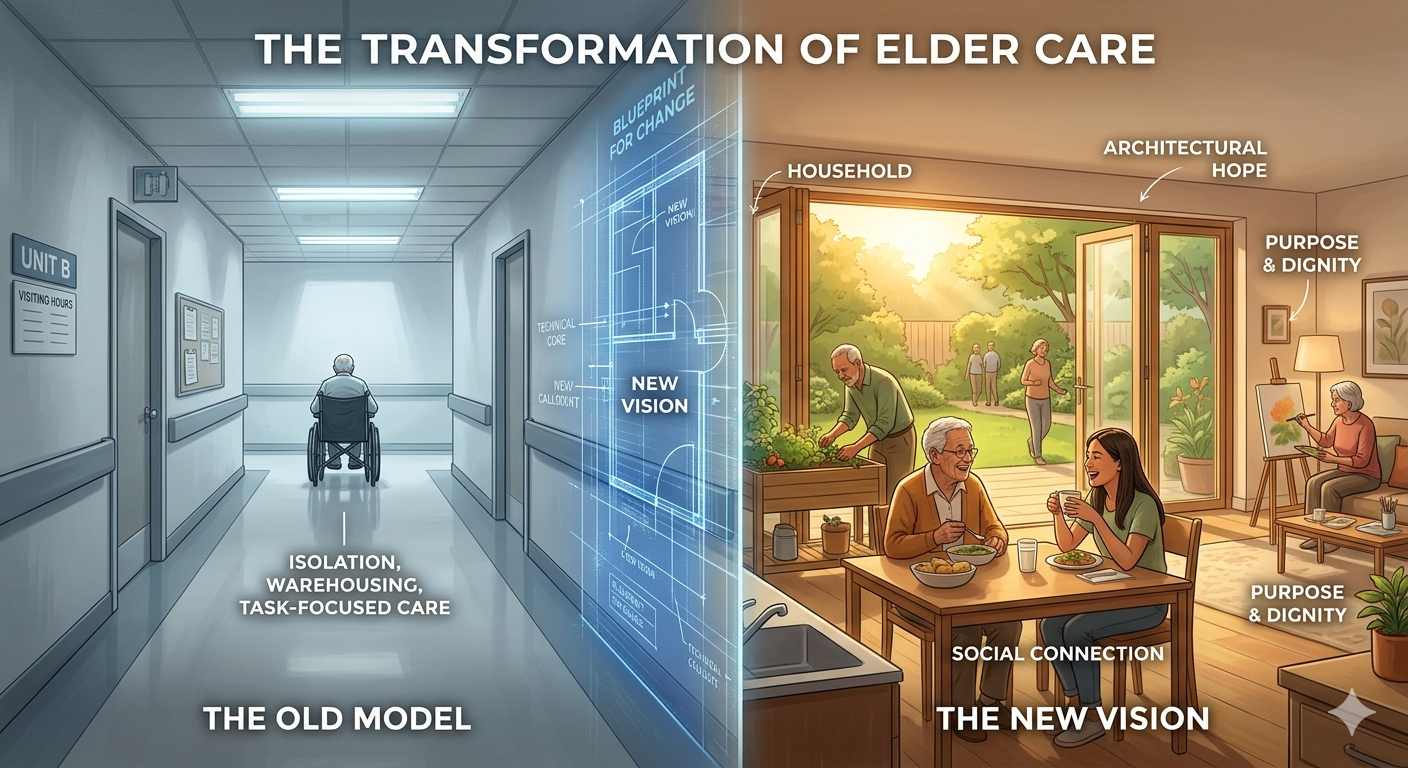
𝐅𝐨𝐜𝐮𝐬𝐢𝐧𝐠 𝐨𝐧 𝐛𝐞𝐭𝐭𝐞𝐫 𝐚𝐥𝐭𝐞𝐫𝐧𝐚𝐭𝐢𝐯𝐞𝐬 𝐭𝐨 𝐬𝐡𝐢𝐩𝐩𝐢𝐧𝐠 𝐨𝐟𝐟 𝐞𝐥𝐝𝐞𝐫𝐥𝐲 𝐩𝐚𝐫𝐞𝐧𝐭𝐬 𝐭𝐨 𝐧𝐮𝐫𝐬𝐢𝐧𝐠 𝐡𝐨𝐦𝐞𝐬. Moira Welsh’s HAPPILY EVER OLDER is a hopeful investigative work that serves as a “blueprint for change” in long-term care . Instead of focusing on common horror stories, Welsh travels across North America and Europe to find facilities that have successfully replaced institutional “warehousing” with vibrant communities based on purpose, freedom, and social connection .
The book’s main findings can be summarized in the table below:
Key Finding:
Description & Examples: Shift from “Warehousing”Move away from task-focused, medicalized care toward creating true homes with purpose .
The Power of Freedom: Emphasizes access to the outdoors and unrestricted movement, countering the isolation of being locked indoors.
Importance of Social Connection: Strong friendships and intergenerational bonds are vital for combating loneliness and improving quality of life.
Dignity Through Small Changes: Personalized care and familiar routines restore dignity. Examples include small “households” and innovative day programs like a 1950s replica town.
Better Pandemic Resilience: Smaller, relationship-focused homes with dedicated staff were better equipped for infection control and mitigating the effects of social isolation during COVID-19 .
📖 A Hopeful Blueprint for a Better Future
Happily Ever Older is fundamentally a book of hope, offering proof that a better model of elder care is not only possible but already in practice . It moves the conversation beyond the failures of the system to provide a clear vision of what it could look like.
Practical Examples: Welsh grounds her findings in real-world stories, like Alice Cowell, who found purpose and happiness living in a dementia household despite not having cognitive decline herself, and a residence where seniors live with student roommates .
A Call for Systemic Change: Welsh argues that while small changes can help, true transformation requires embedding principles of personhood, freedom, and social connection into national standards and legislation for long-term care .
I hope this overview of the book’s main findings is helpful for your research. Are you interested in learning more about any of the specific care models mentioned, such as the Eden Alternative or the Butterfly model?
 Posted in