


𝐓𝐡𝐞 𝐏𝐚𝐫𝐚𝐝𝐨𝐱 𝐨𝐟 𝐂𝐞𝐥𝐥𝐮𝐥𝐚𝐫 “𝐒𝐥𝐞𝐞𝐩” 𝐓𝐡𝐞 𝐏𝐨𝐰𝐞𝐫 𝐨𝐟 𝐃𝐨𝐢𝐧𝐠 𝐍𝐨𝐭𝐡𝐢𝐧𝐠: 𝐖𝐡𝐲 𝐒𝐭𝐞𝐦 𝐂𝐞𝐥𝐥𝐬 𝐍𝐞𝐞𝐝 𝐒𝐥𝐞𝐞𝐩 𝐭𝐨 𝐒𝐮𝐫𝐯𝐢𝐯𝐞 💤
In a world that praises constant hustle, biology teaches us a very different lesson. For our tissue-specific stem cells, staying dormant is actually the key to a long life.
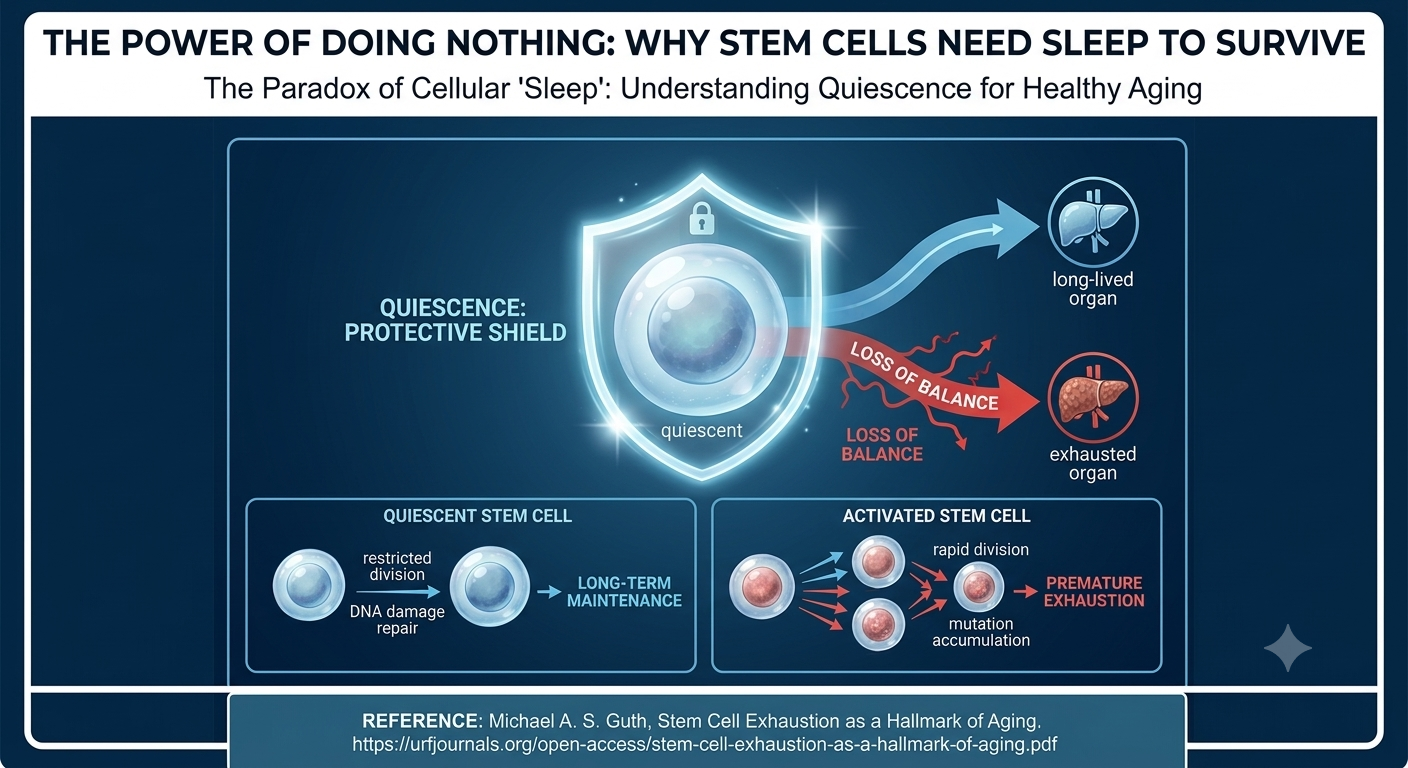
This state of deep sleep is called quiescence.
Recent research emphasizes that the delicate balance between proliferation (dividing) and quiescence is fundamental to maintaining our stem cell pools over a lifetime of environmental stress (Cheung & Rando, 2013).
Think of quiescence as a protective shield. By restricting the number of times a stem cell divides, the body protects it from mutations and metabolic burnout.
When stem cells lose this balance and wake up too frequently:
They trigger premature, rapid divisions.
This creates an imbalance in progenitor cell populations.
Ultimately, it leads to stem cell depletion (Brack & Rando, 2012).
When our stem cell reservoir is exhausted, tissue replenishment stalls during normal daily maintenance and after acute physical damage.
Preserving or restoring this natural cellular “sleep schedule” is currently one of the most exciting frontiers in regenerative medicine and anti-aging strategy.
#RegenerativeMedicine #CellBiology #BiotechTrends #StemCellResearch #Aging
 Posted in