


𝐓𝐡𝐞 𝐌𝐢𝐜𝐫𝐨𝐩𝐥𝐚𝐬𝐭𝐢𝐜 𝐓𝐡𝐫𝐞𝐚𝐭 𝐀𝐜𝐜𝐞𝐥𝐞𝐫𝐚𝐭𝐢𝐧𝐠 𝐀𝐥𝐳𝐡𝐞𝐢𝐦𝐞𝐫’𝐬 𝐃𝐢𝐬𝐞𝐚𝐬𝐞
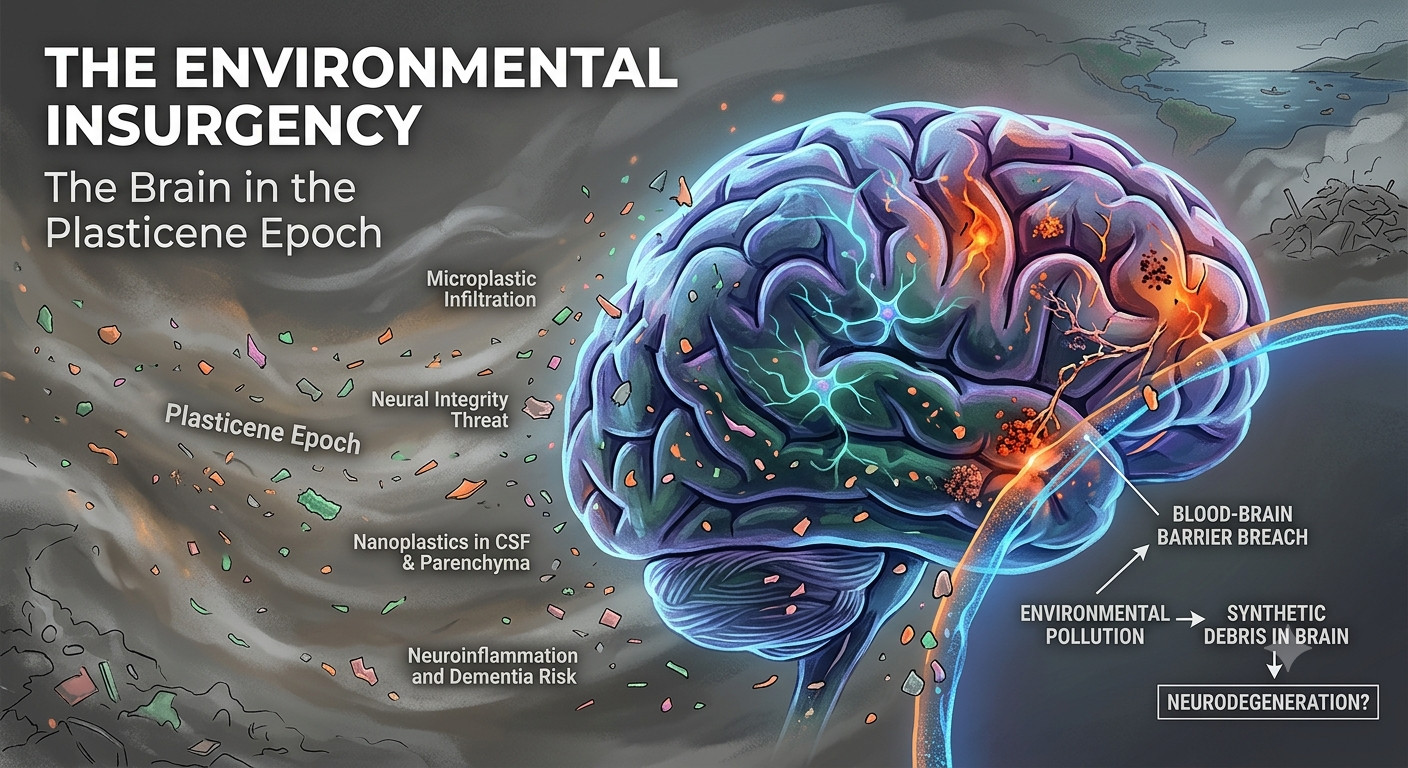
Parallel to this clinical quandary, environmental science has uncovered a novel, pervasive threat to neural integrity. Micro- and nanoplastics, ubiquitous contaminants of the Anthropocene, have infiltrated global ecosystems and, consequently, the human body. These synthetic polymer particles have been confirmed to breach critical biological barriers and have been detected in human blood, placenta, and, most critically, in cerebrospinal fluid and brain parenchyma (He et al., 2025; Lu et al., 2025;
Bhattacharyya et al., 2025; Nihart et al., 2025).
Emerging epidemiological and toxicological evidence links their presence to neuroinflammation, cerebrovascular dysfunction, and an increased risk of dementia (Wang et al., 2026; Chakrabarti, 2026; Gecegelen et al., 2025). The modern brain is therefore chronically inundated with indestructible synthetic material on a scale unprecedented in human history—a period we term the Plasticene Era.
The scale and urgency of this environmental threat have been recognized across disciplines. Thompson et al. (2024), in their retrospective marking of twenty years of microplastic pollution research, concluded that these particles now represent a “planetary boundary threat.” Microplastics pose unknown long-term biological consequences, including neurological health.
A comprehensive health impact assessment by Lamoree et al. (2025) identified the central nervous system as a critical organ of concern. Micro- and nanoplastics can cross the blood-brain barrier, trigger neuroinflammation, and potentially accelerate protein aggregation warrants urgent investigation. The Dual Sequestration Hypothesis (DSH) directly addresses these calls by proposing a specific mechanistic pathway linking plastic particulates to AD pathology.
This environmental insurgency coincides with a growing recognition in neurodegenerative disease research of the role of exogenous exposures, shifting the etiological focus toward gene-environment interactions (Crary, 2024). The convergence of these two truths—clearing hallmark proteins does not cure AD and the modern brain is saturated with a novel class of biopersistent toxicants—forms the critical context for a new synthesis.
 Posted in