


Recent research (Vints et al., 2024, GeroScience) offers critical insights into the biological underpinnings of how resistance training influences the aging brain. By utilizing a randomized controlled trial design, the study examined 70 older adults (aged 60–85) stratified by MCI risk via MoCA scores, shedding light on the structural and neurochemical shifts induced by a 12-week lower-limb progressive resistance program.
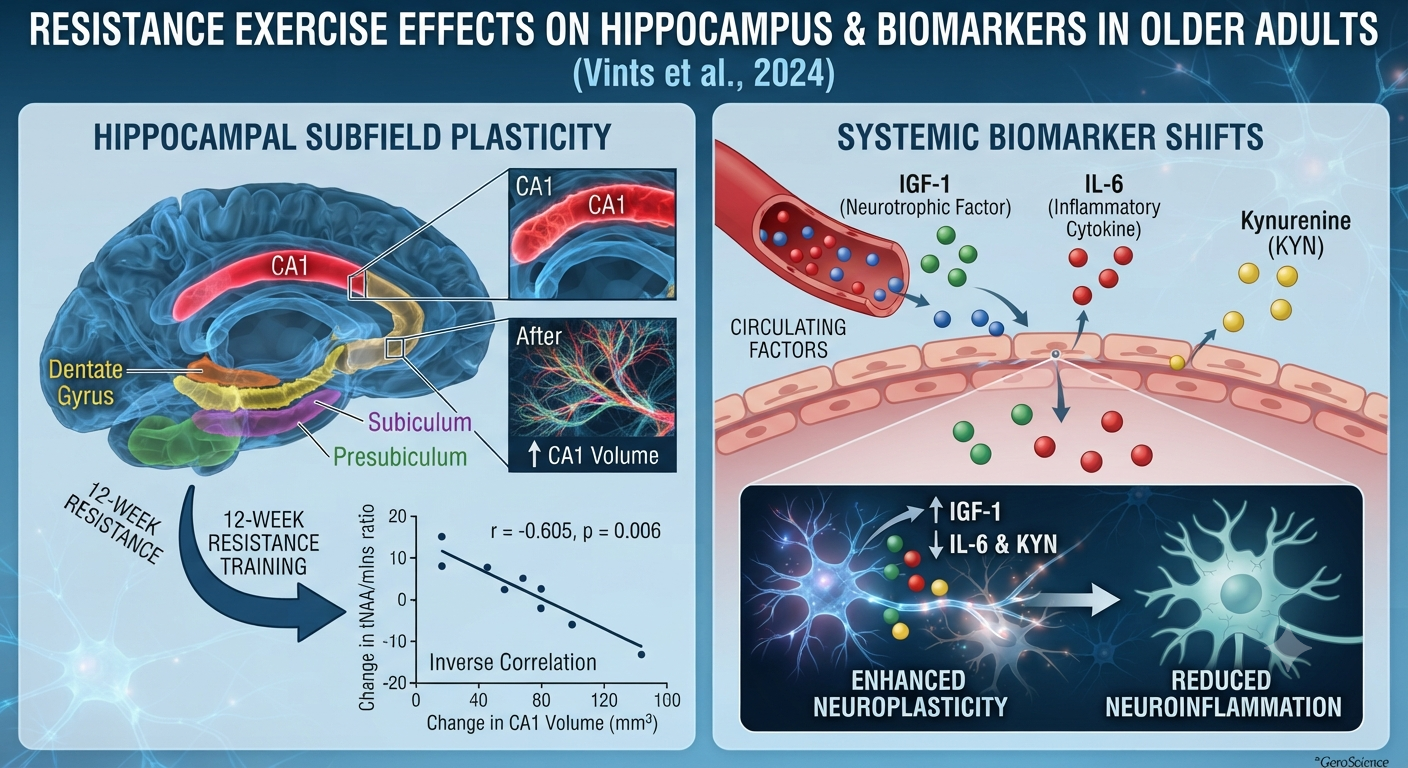
The study employed a multi-modal approach, integrating MRI-based hippocampal subfield volumetry (CA1, CA4, subiculum, presubiculum, and dentate gyrus) with proton magnetic resonance spectroscopy (1H-MRS) to track neurometabolites (tNAA, mIns, Cr) and circulating biomarkers (IGF-1, IL-6, KYN). This depth of analysis is essential for moving beyond simple clinical observations toward mechanistic understanding.
Baseline findings confirmed significant physiological disparities between risk groups, notably higher circulating kynurenine and reduced subiculum volumes in the high-MCI-risk cohort. These markers corroborate existing hypotheses regarding the role of peripheral inflammation and metabolic pathways in cognitive aging, reinforcing the need for targeted, early-stage intervention strategies.
Perhaps most compelling is the demonstrated inverse correlation between exercise-induced CA1 volume changes and shifts in hippocampal tNAA/mIns ratios (r = -0.605, p = 0.006). This relationship underscores a sophisticated interplay between regional structural plasticity and neurochemical markers of neuronal integrity, providing a potential biological signature for the efficacy of resistance training in aging populations.
For those of us working in the HEOR and RWE space, this paper illustrates the importance of mapping surrogate biomarkers to structural outcomes. As we look to demonstrate the value of physical interventions in slowing cognitive decline, studies like this are pivotal in defining clear, measurable endpoints for future clinical trials and HTA submissions. [DOI: 10.1007/s11357-024-01110-6]
 Posted in