


𝐓𝐚𝐫𝐠𝐞𝐭𝐢𝐧𝐠 𝐓𝐃𝐏-𝟒𝟑 𝐢𝐧 𝐀𝐋𝐒: 𝐑𝐞𝐠𝐮𝐥𝐚𝐭𝐨𝐫𝐲 𝐡𝐮𝐫𝐝𝐥𝐞𝐬, 𝐭𝐫𝐢𝐚𝐥 𝐝𝐞𝐬𝐢𝐠𝐧 𝐝𝐞𝐟𝐢𝐜𝐢𝐞𝐧𝐜𝐢𝐞𝐬, 𝐚𝐧𝐝 𝐭𝐡𝐞 𝐜𝐚𝐮𝐬𝐚𝐥 𝐞𝐯𝐢𝐝𝐞𝐧𝐜𝐞 𝐠𝐚𝐩 𝐟𝐨𝐫 𝐂𝐓𝐱𝟏𝟎𝟎𝟎. Requires a subscription but free download available through Sept. 24 with this link https://authors.elsevier.com/a/1nYxN4r9Rkz1wZ
Conclusion: Rigor without cynicism
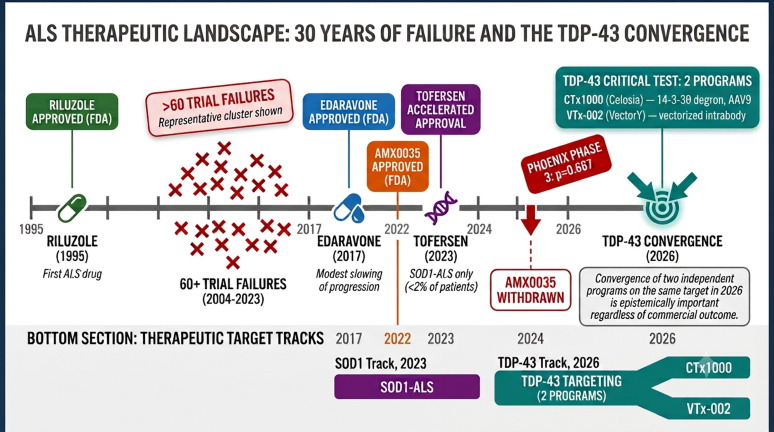
CTx1000 is not another generic antioxidant or anti-inflammatory shot in the dark. The 14-3-3θ/degron mechanism is biologically sophisticated, mechanistically distinct from all prior ALS therapeutic failures, and grounded in a peer-reviewed understanding of the aberrant protein–protein interactions that characterize pathological TDP-43.(p7) Celosia Therapeutics deserves credit for advancing a genuinely novel molecular hypothesis to first-in-human testing in a disease where the ethical pressure to move quickly is intense and legitimate.
The concerns raised in this Feature – open-label bias, the absence of a TDP-43-specific biomarker, restrictive selection criteria, and unresolved dose-optimization imperatives – are not arguments against the program. They are a checklist. They are the questions that decades of ALS trial failures have made mandatory before the next Phase III enrollment.
The field’s collective obligation is straightforward: Celosia should commit, before KOANEWA completes enrollment, to publishing the full trial data regardless of outcome, whether it is positive, negative, or inconclusive. The ALS research community has been harmed, repeatedly, by selective reporting of favorable signals and the burial of null results. The only exit from the graveyard is radical transparency about what worked, what did not, and – most importantly – why. A mechanistically interpretable failure is more valuable to the field than an unexplained success, because it closes experimental space and forces the causal question that 60 failed molecules have failed to answer.
Ultimately, CTx1000 will either provide strong evidence that TDP-43 is a causal driver of human motor neuron disease, or it will demonstrate with rigor that the mechanism, delivery, or underlying biological assumptions require revision. Either outcome, reported fully and transparently, represents more true progress than the field has achieved across decades of methodologically fragile trials.
 Posted in