


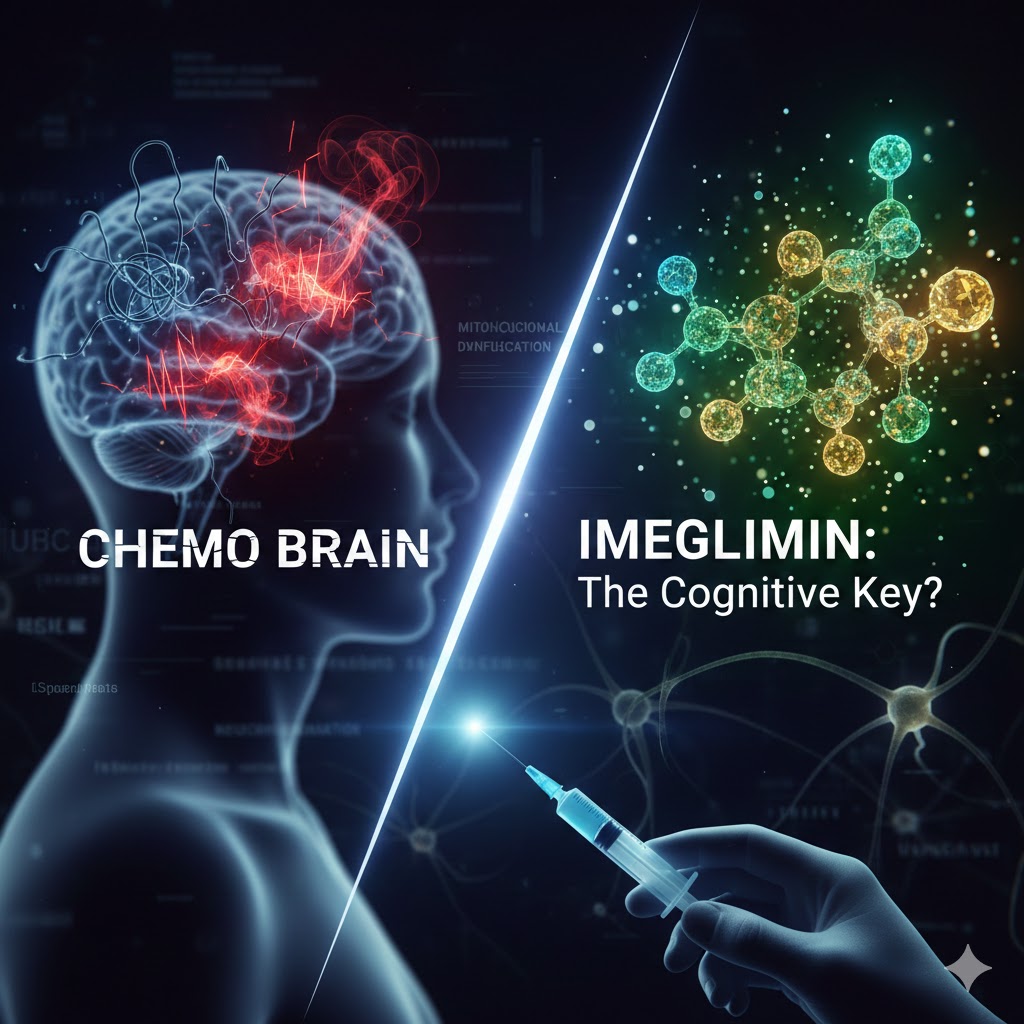
Is the Next Breakthrough in “Chemo Brain” Treatment Hiding in Diabetes Research?
For cancer survivors, the battle often doesn’t end with remission. Chemotherapy-Induced Cognitive Impairment (CICI)—widely known as “Chemo Brain”—remains one of the most debilitating long-term side effects of treatment, affecting memory, executive function, and attention.
While the clinical impact is well-documented, therapeutic options remain limited. However, a hypothesis-driven translational framework is shifting the focus toward a new class of antidiabetic medication: Imeglimin.
The Multi-Hit Pathology of CICI
Chemotherapeutic agents like cisplatin and doxorubicin don’t just target malignant cells; they often trigger a “perfect storm” of neurological damage. The primary drivers include:
-
Mitochondrial Dysfunction: A collapse in bioenergetics and oxygen uptake.
-
Oxidative Stress: The overproduction of reactive oxygen species (ROS).
-
Neuroinflammation: Microglial activation and the surge of pro-inflammatory cytokines (TNF-alpha and IL-6).
-
Impaired Neurogenesis: A significant drop in the brain’s ability to repair and rewire.
Why Imeglimin?
Imeglimin is the first in a new class of tetrahydrotriazine-containing oral antidiabetics. Beyond blood sugar control, its unique neuroprotective properties make it a prime candidate for mitigating CICI through four key pillars:
1. Restoring Mitochondrial Bioenergetics
Imeglimin targets the heart of the neuron. By enhancing mitochondrial membrane potential and oxygen uptake, it counteracts the “energy crisis” caused by chemotherapy.
2. The “Type 3 Diabetes” Connection
Emerging research views Chemo Brain through the lens of “Type 3 Diabetes”—a state of cerebral insulin resistance and glucose hypometabolism. Imeglimin enhances insulin sensitivity and modulates brain glucose metabolism, potentially restoring synaptic plasticity.
3. Quenching the Inflammatory Fire
By suppressing NF-kB signaling, Imeglimin reduces levels of TNF-alpha and IL-6, effectively dampening the neuroinflammatory response fueled by chemotherapy-induced microglial activation.
4. Enhancing Redox Homeostasis
Acting as a potent antioxidant, it protects against neuronal apoptosis, ensuring that synaptic activity remains regular even under the stress of cytotoxic drugs.
Moving from Hypothesis to Humanity
While the mechanistic plausibility of Imeglimin is high, we are currently at a critical junction. Its therapeutic application in CICI remains hypothetical.
To bridge the “unmet validation gap,” we need rigorous preclinical and clinical evaluations. This isn’t just about describing the problem—it’s about applying a translational framework to find a solution that improves the quality of life for millions of cancer survivors.
#Neuroscience #Oncology #CancerResearch #ChemoBrain #Imeglimin #ClinicalResearch #DiabetesResearch #TranslationalMedicine
 Posted in